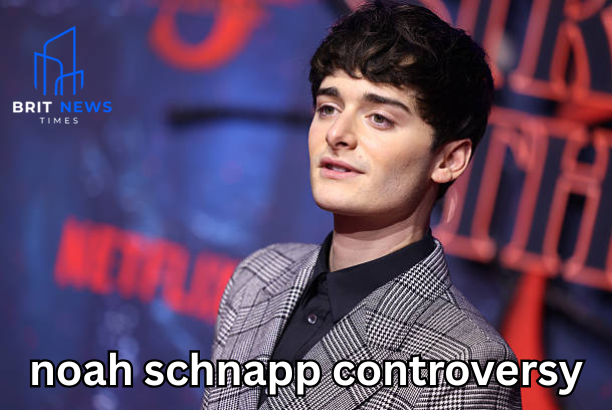
Noah Schnapp is best known for playing Will Byers in the hit TV show Stranger Things. He gained international popularity at a young age, building a large audience across social media platforms while growing up in the public eye.
Before the controversy emerged, much of his public image centered around:
- Acting success
- Youth celebrity culture
- Social media content
- Interviews and fan engagement
- LGBTQ+ representation discussions
Because his audience included millions of younger viewers, online reactions to his statements spread unusually fast.
What Is the Noah Schnapp Controversy?
The noah schnapp controversy explained in simple terms involves backlash connected to social media activity and public reactions related to the Israel-Gaza conflict. The controversy intensified after videos and posts circulated online showing Noah Schnapp appearing in content many viewers interpreted as politically insensitive or divisive.
Some audiences believed his actions showed support for one side of a deeply emotional geopolitical issue, while others argued clips were being shared without proper context. This disagreement quickly evolved into wider online debates involving celebrity activism, free speech, and accountability.
The noah schnapp controversy reasons are often summarized around three main issues:
- Public reaction to politically charged posts
- Viral clips interpreted differently by different audiences
- Calls for accountability from fans and activists
One important detail often missed is that much of the backlash came not only from the content itself, but from how quickly short-form videos removed nuance from longer conversations.
Why Did the Netflix Boycott Discussion Start?
Searches for noah schnapp controversy and Netflix boycott increased after some users on social media encouraged viewers to stop supporting projects associated with him. Since Stranger Things is one of Netflix’s most recognizable series, conversations about the actor quickly became linked to the streaming platform itself.
However, boycott discussions online often become much larger than actual viewing behavior. In many entertainment controversies:
- Social hashtags trend temporarily
- Online outrage spikes rapidly
- Public attention shifts within weeks
- Streaming numbers may not change dramatically
A unique insight here is that digital boycott culture often functions more as a visibility campaign than a measurable economic movement. Many viral boycott campaigns create strong online engagement without producing long-term industry changes.
Another overlooked point is that streaming audiences are global. Reactions to controversies differ significantly depending on regional politics, age groups, and cultural perspectives.
How Social Media Amplified the Situation
The noah schnapp controversy 2025 and noah schnapp controversy 2026 searches continue appearing because internet controversies rarely disappear completely. Instead, they resurface whenever related political discussions trend again.
Social media accelerated the controversy in several ways:
Short Clips Removed Context
Many viral videos lasted only a few seconds. Viewers often formed opinions without watching full interviews or understanding surrounding context.
Algorithms Reward Emotional Reactions
Posts expressing anger, outrage, or shock received more engagement, causing algorithms to amplify emotionally intense content.
Fan Communities Became Polarized
Celebrity fandoms frequently split into defensive and critical groups during controversies. This creates “digital camps” where balanced discussion becomes difficult.
Misinformation Spread Quickly
Edited screenshots and reposted claims circulated faster than corrections or clarifications.
One unique insight not commonly discussed is that younger celebrities often experience intensified backlash because audiences feel unusually connected to them through years of online interaction. Fans sometimes expect celebrities to reflect their own political beliefs, creating stronger emotional reactions when disagreements occur.
Why the Israel Discussion Became So Sensitive
The noah schnapp controversy israel topic became especially emotional because the Israel-Gaza conflict is already one of the world’s most divisive geopolitical issues. Public figures discussing it often face criticism regardless of what they say.
In highly sensitive international conflicts:
- Audiences interpret statements emotionally
- Neutrality may still attract criticism
- Silence can also generate backlash
- Context gets lost in viral sharing
This creates an environment where celebrity comments are analyzed far beyond normal entertainment coverage.
Another important factor is timing. During humanitarian crises, audiences often expect celebrities to communicate carefully and thoughtfully. Even small posts can receive enormous attention when global tensions are already high.
How Celebrity Controversies Affect Careers
Many readers searching what is the noah schnapp controversy really want to know whether it permanently damaged his career.
Historically, celebrity controversies tend to follow several patterns:
Temporary Online Backlash
Most controversies experience a rapid surge in attention followed by gradual decline.
Reputation Shifts
Public perception may change among some audiences even if professional opportunities continue.
Media Reframing
Coverage eventually shifts from outrage to reflection or analysis.
Audience Fragmentation
Some fans remain supportive while others disengage permanently.
In entertainment industries, long-term career impact usually depends on:
- Repeated controversies
- Legal issues
- Industry response
- Public apologies or clarifications
- Future professional conduct
At this stage, the controversy remains more connected to online discourse than confirmed career collapse.
Common Misunderstandings About the Controversy
Several misconceptions continue spreading online.
“Every Viral Screenshot Is Verified”
False. Many posts circulating during controversies lack sourcing or proper context.
“All Fans Share the Same Opinion”
Not true. Audience reactions vary widely depending on age, location, and political perspective.
“Trending Topics Reflect Majority Opinion”
Social media trends often represent highly active online communities rather than the general public.
“Celebrity Silence Means Agreement”
Audiences frequently assume silence carries political meaning, but public figures sometimes avoid speaking to reduce escalation.
A practical lesson from this controversy is that viewers should pause before treating viral reactions as complete evidence.
How Online Controversies Affect Young Celebrities
One aspect rarely explored deeply is how internet controversies uniquely affect actors who became famous as teenagers.
Young celebrities often face:
- Constant public scrutiny
- Limited privacy
- Rapid opinion shifts online
- Pressure to comment on political issues
- Emotional stress from mass criticism
Unlike older public figures with decades of media experience, younger actors sometimes navigate global controversies while still learning how public communication works.
This helps explain why entertainment controversies increasingly become discussions about mental health, digital pressure, and online behavior rather than only celebrity news.
What Can Audiences Learn From This Situation?
The noah schnapp controversy explained clearly shows how difficult it has become to separate verified information from emotional online reactions.
Readers can approach future controversies more responsibly by:
- Watching full interviews instead of clips
- Verifying screenshots before sharing
- Avoiding assumptions based on trending hashtags
- Understanding geopolitical complexity
- Recognizing algorithm-driven outrage
A third unique insight is that modern controversies are often sustained less by new information and more by repeated reposting. Many debates continue because old clips are continuously reshared to new audiences who believe they are recent developments.
FAQs
What is the Noah Schnapp controversy about?
The controversy involves backlash connected to social media activity and discussions related to the Israel-Gaza conflict. Online reactions intensified after viral clips and posts spread across multiple platforms. Different audiences interpreted the content in very different ways.
Why is Noah Schnapp controversy trending again?
Searches like noah schnapp controversy 2025 and noah schnapp controversy 2026 trend because social media frequently revisits older celebrity controversies during major political discussions or entertainment news cycles. Viral reposts often bring renewed attention months later.
Did the controversy lead to a Netflix boycott?
Some online users promoted boycott campaigns connected to Netflix because of Noah Schnapp’s involvement in Stranger Things. However, online boycott trends do not always reflect actual viewing behavior or long-term platform impact.
What are the main Noah Schnapp controversy reasons?
The main reasons involve political interpretation of social media content, reactions to viral videos, and debates about celebrity responsibility during global conflicts. Much of the controversy also centers on how context was presented online.
Is the Noah Schnapp controversy connected to Israel?
Yes. Many discussions surrounding the controversy involve reactions to posts and public conversations related to the Israel-Gaza conflict. This is why searches for noah schnapp controversy israel became highly popular online.
Has Noah Schnapp responded to the controversy?
Public figures sometimes address controversies through interviews, statements, or social media activity. However, online discussions often continue regardless of clarifications because viral narratives tend to spread faster than detailed explanations.
Conclusion
The noah schnapp controversy reflects how modern celebrity culture, political debate, and social media algorithms now overlap in powerful ways. What began as online discussion about a young actor quickly evolved into a larger conversation about activism, accountability, fandom culture, and digital misinformation.
For many readers, the most important takeaway is not choosing sides instantly but learning how to evaluate viral information carefully. In fast-moving online environments, context matters more than ever. Understanding how outrage spreads, how clips are reshared, and how celebrity narratives evolve helps audiences approach future controversies with more clarity and less confusion.