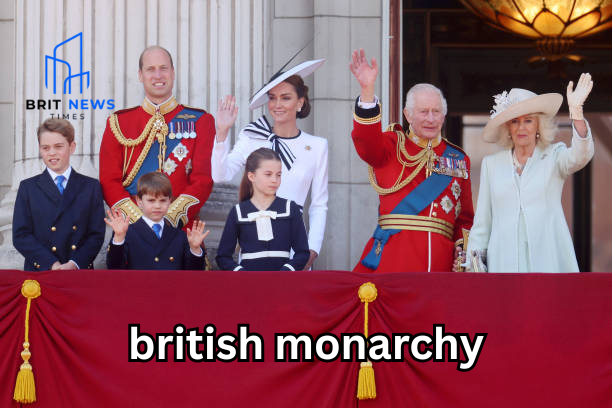
The British monarchy is the constitutional system in which a king or queen serves as the head of state of the United Kingdom.
Today, the monarch’s powers are largely ceremonial. The government is run by elected officials, while the monarch performs constitutional duties such as:
- Opening Parliament
- Meeting foreign leaders
- Representing national traditions
- Supporting charitable organizations
- Providing continuity during political change
The monarchy serves as a symbol of national identity rather than a governing authority.
British Monarchy Timeline: Key Events
Understanding a simple British monarchy timeline helps explain how the institution developed over centuries.
Early Kingdoms (Before 1066)
Before England became a unified nation, several Anglo-Saxon kingdoms existed across the British Isles.
Important rulers included:
- Alfred the Great
- Edward the Elder
- Athelstan
These rulers helped establish foundations for a unified kingdom.
Norman Conquest (1066)
William the Conqueror defeated King Harold II at the Battle of Hastings.
This event transformed England’s political system, language, and aristocracy.
Plantagenet Era (1154–1485)
The Plantagenet dynasty oversaw major developments including:
- Magna Carta (1215)
- Expansion of royal power
- Hundred Years’ War
This period shaped many constitutional traditions still referenced today.
Tudor Dynasty (1485–1603)
The Tudors remain among the most famous royal families.
Notable monarchs included:
- Henry VII
- Henry VIII
- Edward VI
- Mary I
- Elizabeth I
The English Reformation dramatically altered religion and politics.
Stuart Dynasty (1603–1714)
The Stuart period witnessed:
- Union of the Crowns
- English Civil War
- Execution of Charles I
- Restoration of the monarchy
- Glorious Revolution
These events limited royal authority and strengthened Parliament.
Hanoverian Era (1714–1901)
The Hanoverians oversaw:
- Industrial Revolution
- Expansion of the British Empire
- Constitutional monarchy reforms
During this period, elected governments became increasingly powerful.
Modern Royal House (1901–Present)
The current royal family descends from the House of Windsor.
Major monarchs include:
- George V
- George VI
- Elizabeth II
- Charles III
This era transformed the monarchy into a modern institution focused on public service.
British Monarchy Family Tree Explained
The british monarchy family tree can appear complicated, but the basic structure is straightforward.
The current royal line descends from King George V.
The direct line includes:
- King Charles III
- Prince William
- Prince George
- Princess Charlotte
- Prince Louis
This structure represents the modern line of succession British monarchy rules.
Why Family Trees Matter
Royal family trees determine succession rights, titles, and constitutional continuity.
Unlike ordinary family histories, royal genealogies carry legal significance.
British Monarchy Line of Succession History
The british monarchy line of succession history has changed dramatically over time.
Historically:
- Men often had priority over women.
- Religion influenced eligibility.
- Parliament sometimes altered succession rules.
Modern reforms introduced gender-neutral succession for younger generations.
Today, birth order generally determines position in the succession line regardless of gender.
British Monarchy Succession Rules
The current british monarchy succession system prioritizes:
- Direct descendants
- Birth order
- Eligibility under constitutional law
This ensures a clear transition when a monarch dies or abdicates.
British Monarchy List: Major Dynasties
A simplified british monarchy list includes:
- Anglo-Saxon Kings
- Norman Dynasty
- Plantagenet Dynasty
- Tudor Dynasty
- Stuart Dynasty
- Hanoverian Dynasty
- House of Saxe-Coburg and Gotha
- House of Windsor
Each dynasty reflects a different stage of Britain’s political and cultural development.
How Long Has the British Monarchy Existed?
A common question is: how long has the British monarchy existed?
The monarchy traces its roots back more than 1,000 years.
Although the institution has evolved significantly, historians generally recognize continuity from the Anglo-Saxon period through the present day.
Few political institutions anywhere in the world can claim a comparable history.
Unique Insight
One reason for the monarchy’s longevity is its willingness to surrender power when necessary. Unlike many historical monarchies that resisted reform, the British Crown often adapted to constitutional changes rather than opposing them.
Why Does the British Monarchy Still Exist?
Many people ask: why does the British monarchy still exist?
Several factors contribute to its survival:
Constitutional Stability
The monarchy provides continuity during political transitions.
National Identity
Many citizens view the Crown as part of British heritage.
International Recognition
The royal family remains globally recognizable.
Adaptability
The institution continuously evolves to meet modern expectations.
Public Engagement
Royal events often attract significant public interest and tourism.
Economic Value of British Monarchy Tourism
The economic value of british monarchy tourism remains a major point of debate.
Supporters argue that royal landmarks, ceremonies, and traditions attract millions of visitors annually.
Tourist interest includes:
- Historic palaces
- Royal ceremonies
- Museums
- Cultural heritage sites
Critics argue that tourism would continue even without the monarchy because many attractions are historic landmarks regardless of who occupies them.
The true economic impact remains complex and is frequently debated by economists.
Unique Insight
Many discussions focus only on visitor numbers. However, the monarchy’s global branding effect may be equally important, influencing international perceptions of Britain far beyond direct tourism revenue.
British Monarchy Popularity in Modern Society
British monarchy popularity has fluctuated across generations.
Factors influencing public opinion include:
- Economic conditions
- Major royal events
- Media coverage
- Generational attitudes
- Public trust
Younger citizens often evaluate the monarchy differently than older generations, creating ongoing debates about its future role.
British Monarchy News and Recent Developments
Recent british monarchy news has focused on the transition following Queen Elizabeth II’s reign and the modernization efforts of King Charles III.
Key themes include:
- Environmental initiatives
- Streamlining royal duties
- Succession planning
- Public engagement
These developments reflect efforts to keep the monarchy relevant in the twenty-first century.
Future of the British Monarchy
The future of the British monarchy depends largely on its ability to remain relevant while preserving tradition.
Challenges include:
- Changing public expectations
- Media scrutiny
- Constitutional debates
- Generational differences
Opportunities include:
- Digital engagement
- Charitable leadership
- Environmental advocacy
- Cultural diplomacy
The monarchy’s history suggests that adaptation remains its greatest strength.
Should the British Monarchy Be Abolished? Pros and Cons
The debate surrounding should the british monarchy be abolished pros and cons remains active.
Arguments Supporting the Monarchy
- Historical continuity
- National identity
- Tourism benefits
- Political neutrality
- Diplomatic influence
Arguments Against the Monarchy
- Cost concerns
- Questions about inherited privilege
- Democratic principles
- Calls for constitutional reform
Reasonable people can disagree on this issue, which explains why the debate continues.
Common Misconceptions About the British Monarchy
Several myths persist:
- The monarch controls government policy.
- Royal succession is determined by popularity.
- The monarchy has unlimited power.
- The institution has never changed.
- The Crown exists solely because of tradition.
In reality, the monarchy functions within strict constitutional limits.
Frequently Asked Questions
What is the British monarchy line of succession?
The line of succession determines who will become monarch next. It follows constitutional rules based primarily on descent and birth order.
How long has the British monarchy existed?
The monarchy’s roots stretch back more than a thousand years, making it one of the world’s oldest continuously existing institutions.
Why does the British monarchy still exist?
It survives because it provides continuity, national symbolism, constitutional stability, and cultural significance for many citizens.
What is included in a British monarchy family tree?
A family tree shows relationships between monarchs, heirs, and descendants, helping explain succession rights and historical connections.
What is the future of the British monarchy?
Its future depends on balancing tradition with modernization while maintaining public support and constitutional relevance.
Does the monarchy benefit the economy?
Supporters cite tourism, global recognition, and cultural branding, while critics question the extent of those economic benefits.
Conclusion
The story of the British monarchy is ultimately a story of adaptation. From medieval kings wielding immense authority to modern monarchs serving primarily symbolic roles, the Crown has repeatedly transformed itself to survive changing political realities. Understanding the british monarchy timeline, succession system, family tree, and ongoing debates provides valuable insight into one of the world’s most enduring institutions. Whether you support the monarchy or question its role, its influence on British history, culture, and national identity remains impossible to ignore.

